
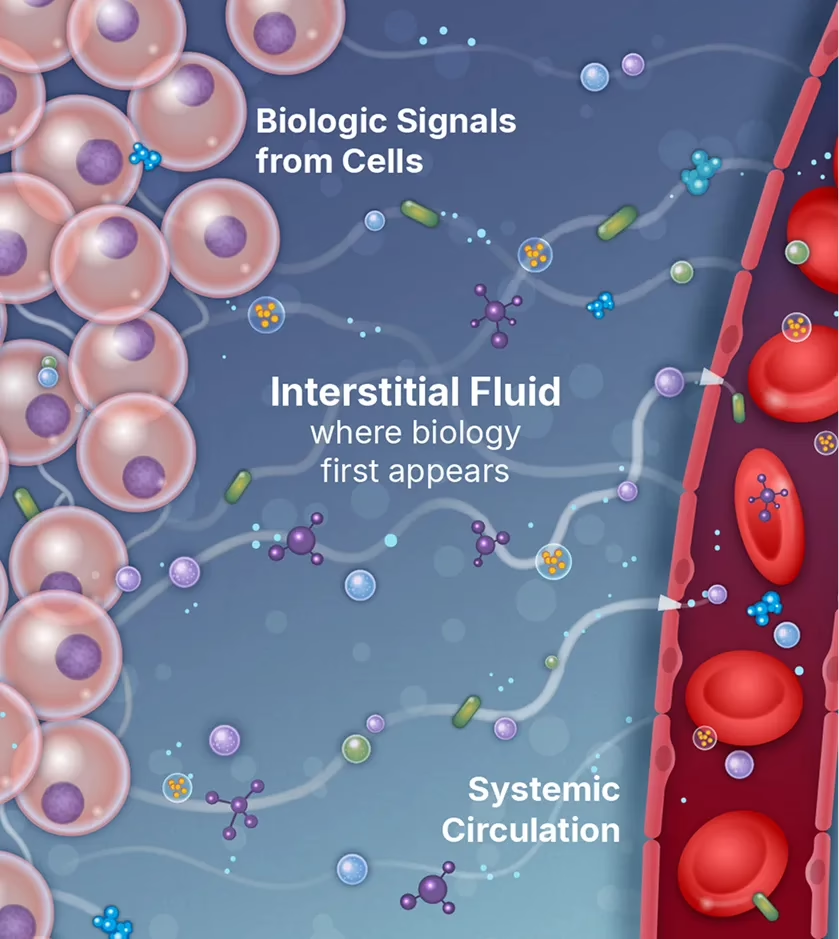
Many biological signals become visible in interstitial fluid (ISF) before they become measurable in blood. For decades, scientists have understood its value. Access has been the challenge.
Interstitial fluid surrounds and connects the cells that make up human biology. Proteins, peptides, metabolites, nucleic acids, and other signaling molecules enter ISF directly from nearby tissues.
ISF serves as the primary biological environment surrounding cells and facilitates the exchange of molecular signals between tissues and the circulatory system.¹ ²
William Harvey demonstrates blood circulation, transforming medicine's understanding of systemic biology.¹
Scientists identify extracellular and interstitial fluid, recognizing a biological environment surrounding every cell.²
Microdialysis, wick techniques, and suction blister methods provide early access to ISF for research applications.³
First FDA-approved continuous glucose monitor demonstrates the clinical utility of ISF-based monitoring.⁴
Microneedle and patch-based technologies expand access to ISF through minimally invasive sampling.⁵
The interstitium gains widespread scientific attention as an extensive fluid-filled tissue network.⁶
Research across oncology, neuroscience, immunology, metabolic disease, and drug development continues to expand our understanding of ISF biology.⁷
For nearly 150 years, scientists have recognized the biological importance of interstitial fluid. The challenge was not biology—it was access.
p-Tau217
CTnT
CEA
IL-6
MMP-9
Some biological signals remain localized to the tissue where they originate. Others become diluted, altered, or fall below detectable levels by the time they reach systemic circulation.
ISF provides access to biology that may otherwise remain difficult to detect.
ISF provides access to biology occurring within tissue microenvironments that may be difficult to observe through blood alone.

p-Tau217
CTnT
CEA
IL-6
MMP-9

PK/PD monitoring and measurement of tissue-level drug exposure and biological response.

Accessing tumor biology beyond what blood alone can reveal.

Continuous measurement of glucose, cardiac injury, and stress biomarkers through ISF.

Measuring neurological and neuroinflammatory signals closer to their source.
The value of ISF was understood decades ago.
Access remained the challenge. KIFFIK was built to change that.
The K-EXP™ platform enables repeat access to interstitial fluid through a non-invasive approach designed for longitudinal biological monitoring.
Discover how the K-EXP™ platform enables repeat access to ISF. Because understanding biology requires more than measuring blood alone. It requires access to biology closer to where it happens.